
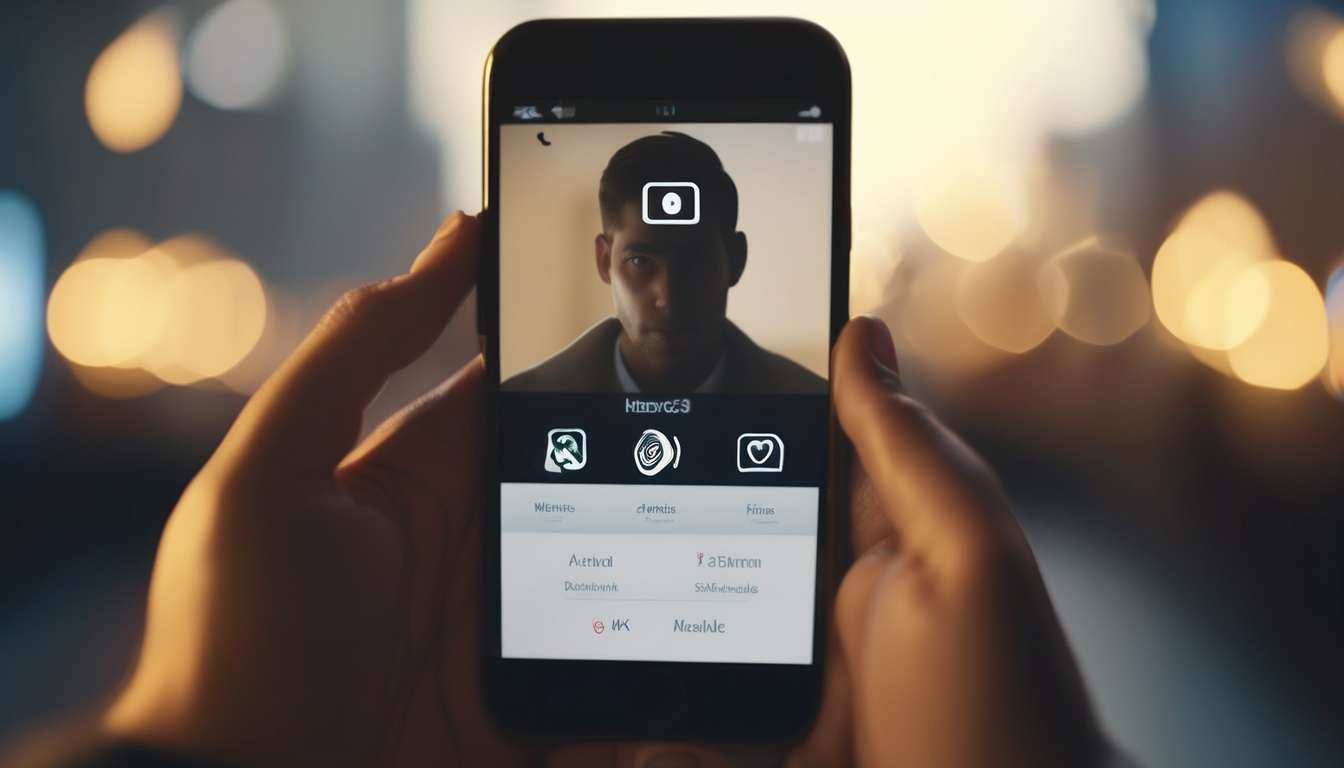
But as operators of platforms and investigators of user safety, we face a persistent problem: verifying who users really are without compromising privacy or usability.
We see accounts that masquerade as real people, bots that skew engagement, and images lifted from elsewhere that lure trust away.
We must reconcile competing demands — accuracy, speed, consent, accessibility — while responding to fraud that evolves daily.
Our teams balance automated checks, manual review, and user-provided credentials, yet gaps remain.
We worry about false positives that lock out legitimate members and false negatives that let bad actors slip through.
We also confront legal and ethical constraints that shape what verification can reasonably demand.
In this article, we examine the methods adult dating platforms use to verify profiles, assess strengths and weaknesses, and propose practical approaches to improve trust without eroding user dignity.
Photo Verification
We require users to submit a live selfie that we compare to their profile photos to confirm identity.
We use photo verification to build trust and foster a safe, welcoming community.
- It’s a straightforward way to reduce fake profiles and harassment.
- Visible verification encourages authentic connections while protecting everyone’s right to belong.
We run automated liveness detection to ensure the selfie is from a real person in real time.
- This prevents masks, deepfakes, or replayed images from passing verification.
- Liveness checks are automated and designed to be quick and minimally intrusive.
We match facial features against uploaded profile photos for quick identity verification.
- Matches complete the verification quickly so members can participate without anxiety.
- Mismatches are flagged for manual review rather than automatic rejection.
We explain the process clearly, keep steps short, and notify members promptly.
- Submit a live selfie.
- Automated liveness check runs.
- Facial match against profile photos is performed.
- Members receive results quickly or a prompt for next steps.
We don’t make assumptions and provide support for anyone who encounters problems.
- Clear help resources and an accessible appeals process are available.
- Manual review and human support are provided when the automated system is uncertain.
We balance precision with warmth to create an inclusive experience.
- The system aims to be accurate while minimizing friction and anxiety.
- Our tone is friendly and supportive throughout the process.
ID Document Checks
ID upload requirement and when it applies
For added assurance, we ask a subset of members to upload a government-issued ID so we can confirm their name and age against their profile.
How we determine who must upload an ID
We explain that this is optional for many, but required when:
- safety checks flag a concern,
- members request verified badges.
How ID checks fit into our verification workflows
Our ID document checks tie into photo verification and broader identity verification workflows:
- we compare the ID image to the profile photos and metadata to ensure consistency,
- we cross-check readable fields (name, date of birth) against declared profile data,
- we focus on document authenticity and readable fields rather than repeating liveness checks used elsewhere.
Privacy, storage, and retention
We store and process documents under strict retention and encryption policies, and we share clear timelines so members feel respected and included.
Appeals and member communications
We outline appeal steps if a document is rejected, keeping communications warm and supportive to foster belonging.
Purpose and balance
This layered approach helps build trust across the community while minimizing privacy impact and avoiding unnecessary duplication of other verification steps.
Liveness Detection
We use real-time face movement and challenge-response checks to confirm that a person in a selfie is a live human rather than a static image or prerecorded video.
We implement liveness detection as a friendly gate: it helps everyone feel safer by reducing fake profiles and ensuring photo verification reflects a real person in the moment.
We guide members through quick prompts—blink, turn your head, smile—to keep the process simple and inclusive.
- These prompts are short and easy to follow.
- We explain why each step matters so people feel respected, not policed.
We combine these checks with identity verification practices to make sure the community is genuine without creating barriers.
Our liveness detection balances speed and accuracy, minimizing false rejections while deterring spoofing attempts like printed photos or replayed videos.
We provide clear feedback and support if an initial attempt fails, so people can complete photo verification comfortably.
By using thoughtful liveness detection, we protect connections and help everyone belong to a safer, more authentic space.
Biometric Matching
We match a user’s submitted selfie to their verified profile photo and stored biometric template to confirm consistency while keeping comparisons quick and privacy-preserving.
We use secure, automated algorithms that compare facial landmarks and feature vectors to support photo verification and broader identity verification goals, minimizing manual review while maintaining accuracy.
We combine this matching with prior liveness detection results so that only live selfies enter the biometric pipeline, reducing spoofing risk.
We store templates in encrypted form and perform comparisons via hashed or tokenized representations where possible, so community members can feel safe sharing images without exposing raw files.
We aim for fast responses so people seeking connection don’t feel stalled; most matches complete in seconds and flag only a small share for human follow-up.
We provide clear, empathetic notifications if a match fails and offer simple steps to retry, because belonging depends on trust and accessible processes that respect users’ time and dignity.
Social Media Links
We allow users to link or import social media profiles so we can cross-check publicly visible content and strengthen confidence in a member’s claimed identity.
Social links are a community-building tool: they help new members feel connected and let existing members see consistent signals across platforms.
When people voluntarily share Instagram, Twitter, or public posts, we compare profile photos and timestamps to support photo verification and to surface mismatches that might need further review.
We don’t treat social links as the sole proof of identity; they complement other verification steps.
- They work alongside identity verification and liveness detection where required.
- Our team and automated checks flag inconsistencies such as reused images, sparse histories, or abrupt account creation that suggest an account warrants additional scrutiny.
We respect privacy choices.
- Members can opt out of linking and still participate.
- However, profiles with verified social footprints tend to inspire more trust and engagement in the community.
Phone and Email Verification
We require users to confirm a phone number and an email address.
Purpose: to quickly validate contactability, deter duplicate or disposable accounts, and provide a reliable channel for security alerts and account recovery.
How we verify:
- We ask for a single-use code to be entered during signup.
- We send verification links for email confirmation.
Design principle: we keep the process simple so everyone feels welcomed and safe.
Phone and email checks are our first line of defense.
When they’re used: before we ask for photo verification or more advanced identity verification steps.
Benefits of confirmed contact details:
- They help us connect real people and foster genuine communities.
- Verified accounts are more likely to be trusted by other users and by our moderation systems.
- We can use these channels to request a quick liveness retest or to resolve account issues.
Tone and policy:
We balance security with warmth.
- Clear, respectful prompts and transparent policies make it easy for members to belong while maintaining a safer platform.
Behavioral Analysis
We analyze patterns of account activity and interaction to spot suspicious behavior, deter abuse, and surface genuine users more reliably.
We look for inconsistencies between declared identity verification and on-platform behavior.
- Examples of inconsistent signals:
- Rapid messaging bursts.
- Duplicate photos.
- Profiles that avoid liveness detection prompts.
By correlating photo verification results with conversation style and timing, we reduce false positives and protect members who want authentic connections.
We treat behavioral signals as part of a layered trust system alongside phone checks and documented identity verification.
When an account shows erratic activity or mismatched photos, we trigger lightweight, respectful checks.
- Typical follow-ups:
- Extra liveness detection.
- A nudge to complete photo verification.
These steps are designed so people feel safe without being excluded.
We also use aggregate behavior trends to adapt thresholds, ensuring newcomers who seek community aren’t unfairly filtered.
Our goal is to balance safety and belonging: detecting bad actors while keeping the process transparent, humane, and focused on helping real people find meaningful connections.
Manual Moderation
We review flagged accounts and content manually to resolve edge cases, verify ambiguous signals, and escalate incidents that automated systems can’t confidently handle.
We prioritize humane, consistent decisions so members feel safe and included while we protect community integrity.
Our moderators use photo and identity verification as starting points:
- Cross-check documents and profile images.
- Note when liveness detection outputs conflict with profile behavior.
We apply clear checklists to reduce bias:
- Confirm document authenticity.
- Ensure photo matches claimed identity.
- Validate liveness captures against selfie submissions.
When automated liveness detection is inconclusive, we request additional verification or escalate to trained reviewers.
We communicate transparently with users, explaining required steps and expected timelines, and we offer appeal channels for those who feel unfairly treated.
By combining human judgment with technical signals, we maintain a welcoming space where members belong and can trust platform safety measures without unnecessary friction.
How do verification methods protect my privacy and personal data?
Verification protects privacy and personal data by confirming identities while minimizing exposed details.
We confirm identities without exposing unnecessary details.
- Use methods that verify attributes (like age or membership) rather than revealing full identity.
- Favor approaches such as zero-knowledge proofs, attribute-based credentials, or tokenized attestations where available.
We limit data shared with others.
- Share only the minimum required attributes for a transaction or interaction.
- Prefer one-time or purpose-limited tokens instead of reusable identifiers.
We store minimal information and encrypt sensitive files.
- Retain only data strictly necessary for operation or legal requirements.
- Encrypt data at rest and in transit using strong, modern cryptography.
We follow access rules so only authorized systems see needed data.
- Implement role-based or attribute-based access controls.
- Log and audit access to detect improper disclosures.
We get alerts about suspicious activity and can remove data.
- Monitor systems and notify users of anomalous sign-ins or operations.
- Provide mechanisms for data deletion or correction on request.
We trust platforms that publish clear policies and use secure, privacy-first practices.
- Prefer services that are transparent about data use, retention, and sharing.
- Choose providers with strong privacy controls, regular security audits, and responsible disclosure practices.
Can I choose which verification methods to use, or are some mandatory to access certain features?
Can we pick verification methods or are some required for certain features?
Short answer: You often get choices, but some methods may be required to access sensitive features.
Details:
- Basic checks (email, phone) are usually optional and commonly used for general access and account recovery.
- Advanced options (photo ID, live selfie) are sometimes mandatory to unlock sensitive features like high-value transactions, identity-sensitive services, or regulatory compliance requirements.
How to approach choices:
- Weigh convenience versus privacy.
- Look for clear explanations from the platform about why each method is needed.
- Prefer platforms that offer alternatives or limit required data to the minimum necessary.
Why this matters: Platforms should explain the purpose of each verification method so users can make informed choices that balance security, privacy, and inclusion.
What happens to my verification data if I delete my account or the platform is shut down?
We expect clear, respectful handling of verification data when an account is deleted or the platform shuts down.
Platforms should delete or anonymize personal verification records in accordance with their privacy policy and applicable law.
Platforms must notify users about retention periods and any legal obligations to retain verification data.
If verification data is shared with third parties, platforms should confirm those partners follow the same deletion or anonymization procedures.
Conclusion
You’ve seen how adult dating platforms reduce fake profiles and abuse by layering multiple verification methods.
Common verification layers include:
- Photo checks (manual or automated)
- ID verification
- Liveness tests and biometric matching
- Social link checks (connected accounts)
- Phone and email verification
- Behavioral analytics (patterns, anomalies)
- Human moderation and review
No single method is perfect, so platforms combine automated tools with manual moderation.
This balance aims to optimize three goals:
- Safety — reduce fraud, impersonation, and abuse
- Privacy — limit sensitive data exposure and misuse
- User convenience — avoid excessive friction that drives users away
As a user, take proactive steps to protect yourself:
- Verify profiles yourself — look for consistent photos, public social signals, and corroborating details
- Prefer platforms that disclose their methods — transparency helps you judge effectiveness and privacy trade-offs
- Report suspicious accounts — timely reports assist moderators and improve community safety
Staying alert and using platform tools responsibly helps keep the community safer for everyone.